
Key Takeaways:
- Consistent brushing, flossing, hydration, and routine dental visits are the foundation of lifelong oral health.
- Small dental concerns are easier to treat when caught early.
- Consistency—not perfection—is the key to maintaining a healthy smile.
Many people assume maintaining a healthy smile requires complicated routines or perfect habits. In reality, long-term oral health is often built through small, consistent actions practiced every day.
The choices you make on a daily basis can have a significant impact on your teeth, gums, comfort, and overall wellbeing. While no one is perfect, developing healthy habits can help reduce the risk of cavities, gum disease, tooth loss, and more extensive dental treatment in the future.
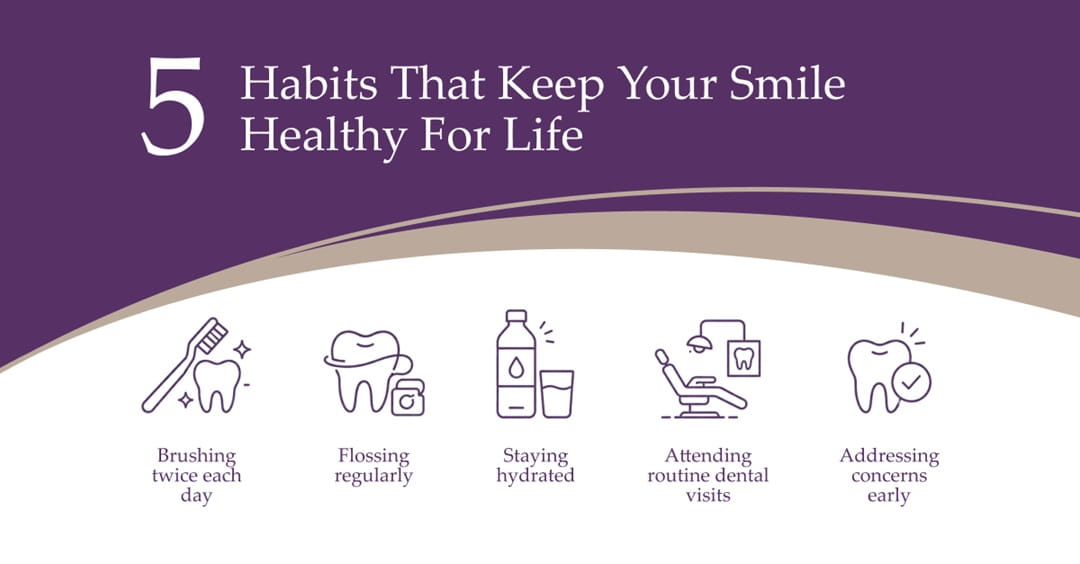
Here are five habits that can help protect your smile for years to come.
1. Brush Twice Every Day
Brushing your teeth is one of the simplest and most effective ways to remove plaque and bacteria before they can cause problems.
Plaque is a sticky film that forms on teeth throughout the day. If it is not removed regularly, it can contribute to cavities, gum disease, bad breath, and other oral health concerns.
For best results:
- Brush twice daily
- Use a fluoride toothpaste
- Brush for at least two minutes
- Clean all tooth surfaces, including along the gumline
- Replace your toothbrush every three to four months
Consistent brushing helps protect both your teeth and your gums.
2. Don’t Skip Flossing
Even the best toothbrush cannot effectively clean between teeth.
Food particles and plaque often collect in areas where toothbrush bristles cannot reach. Over time, this buildup can contribute to cavities, gum inflammation, and periodontal disease.
Daily flossing helps:
- Remove plaque between teeth
- Reduce gum inflammation
- Lower the risk of cavities
- Improve overall gum health
- Support fresher breath
Many patients find that floss picks, water flossers, or other interdental cleaning tools can make the habit easier to maintain.
3. Stay Hydrated Throughout the Day
Water plays an important role in maintaining a healthy mouth.
Saliva helps wash away food particles, neutralize acids, and protect teeth from harmful bacteria. When the mouth becomes dry, the risk of cavities and other oral health concerns may increase.
Drinking water throughout the day can help:
- Support healthy saliva production
- Rinse away food debris
- Reduce acid exposure
- Keep tissues hydrated
- Promote overall health
Water is especially important after meals and snacks, particularly when consuming sugary or acidic foods and beverages.
4. Keep Up With Routine Dental Visits
Even patients with excellent home care benefit from regular professional examinations and cleanings.
Routine visits allow your dental team to identify concerns before they become larger problems. Many oral health issues develop gradually and may not cause noticeable symptoms in their early stages.
Regular dental visits help us monitor:
- Cavities
- Gum disease
- Tooth wear
- Bite changes
- Existing fillings and crowns
- Oral cancer screenings
- Signs of future concerns
Preventive care often provides more treatment options and helps reduce the likelihood of extensive treatment later.
5. Address Concerns Early
One of the most important habits for long-term oral health is not ignoring changes in your mouth.
A small cavity, chipped tooth, worn filling, or area of sensitivity may seem minor at first. However, many dental concerns become more complex when left untreated.
You should contact your dentist if you notice:
- Tooth sensitivity
- Pain when chewing
- Bleeding gums
- Chipped or cracked teeth
- Loose dental work
- Jaw discomfort
- Changes in your bite
- Persistent bad breath
Addressing concerns early can help preserve your natural teeth and often leads to simpler treatment solutions.
Why Consistency Matters More Than Perfection
Many patients worry that missing a day of flossing or occasionally forgetting to brush means they have failed.
The reality is that oral health is not about perfection. It is about consistency over time.
Healthy smiles are built through habits repeated day after day, year after year. Small actions performed consistently often have a greater impact than occasional bursts of motivation.
The goal is not to be perfect. The goal is to create routines that support your long-term health.
Frequently Asked Questions
What is the most important habit for healthy teeth?
Short answer: Consistent brushing and flossing are two of the most important habits.
Explanation: Removing plaque regularly helps reduce the risk of cavities, gum disease, and other oral health concerns.
How often should I brush my teeth?
Short answer: Twice per day.
Explanation: Brushing in the morning and before bed helps remove plaque and bacteria that accumulate throughout the day.
Is flossing really necessary?
Short answer: Yes.
Explanation: Flossing cleans areas between teeth that a toothbrush cannot effectively reach, helping prevent cavities and gum disease.
Why are regular dental visits important?
Short answer: They help identify concerns early.
Explanation: Routine exams and cleanings allow your dental team to monitor your oral health and address small issues before they become larger problems.
How much water should I drink for oral health?
Short answer: Enough to stay hydrated throughout the day.
Explanation: Water supports saliva production, helps rinse away food particles, and protects teeth from acid and bacteria.
Can small dental problems become bigger issues?
Short answer: Absolutely.
Explanation: Cavities, cracks, worn fillings, and gum problems often worsen over time if left untreated, leading to more extensive treatment needs.
Build Healthy Habits That Last
A healthy smile is not created overnight. It is built through small, consistent habits that support your oral health every day.
Brushing, flossing, staying hydrated, attending routine dental visits, and addressing concerns early can help protect your smile and reduce the risk of future dental problems.
At Weisbard Dental, we believe prevention is one of the most valuable investments you can make in your long-term oral health. Our team is committed to helping patients build healthy habits and maintain confident, healthy smiles for life.

For over 30 years, Dr. Lee Weisbard, D.D.S., and her team have provided Colorado and beyond with the highest quality dental experience available. And it all grew out of her compassion for others and a love for the dental arts.
She has the skills and committed excellence in cosmetic, general, and dental implant dentistry that brings you the best dental care in Greenwood Village, DTC, Englewood, Cherry Hills, Littleton, and the surrounding cities of Denver. She has received numerous awards and honors, including the prestigious 2018 Colorado Businesswoman of the Year award.